





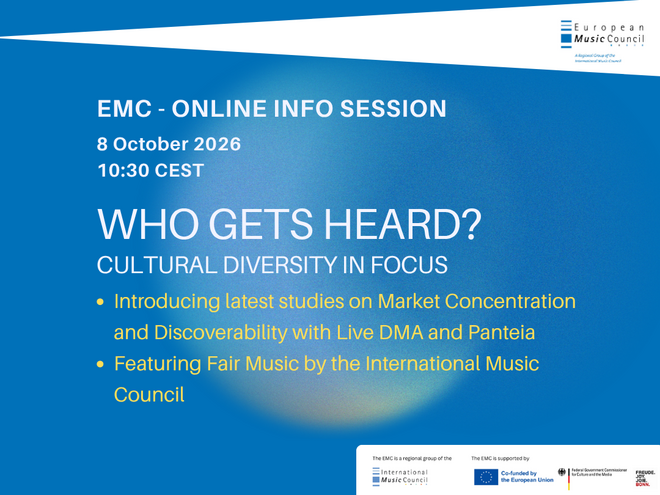
On 8 October 2026, the European Music Council hosted an online info session on market concentration, discoverability and Fair Music. Bringing together contributions from Live DMA, Panteia and the International Music Council, the session explored how ownership structures and digital platforms influence musical diversity, access to culture and opportunities for artists.
Erica Romero from Live DMA presented findings from the mapping of ownership in Europe’s live music sector, developed with the Reset! network and SMA, and carried out by researcher Matthieu Barreira. The presentation highlighted how major corporations increasingly control several parts of the live music value chain, including venues, festivals, ticketing, promotion and artist management. This concentration can reduce the bargaining power of independent operators and limit opportunities for emerging artists and diverse programming. She also outlined ongoing advocacy around the revision of the EU merger guidelines, calling for stronger consideration of cultural diversity alongside economic factors, and highlighted the need for a publicly supported observatory to monitor developments in the sector.
Paul Vroonhof from Panteia shared findings from the European Commission’s study on the discoverability of diverse European cultural content in the digital environment, with a particular focus on music. His presentation underlined that availability online does not automatically lead to visibility: recommendation systems, playlists, metadata and promotional resources all shape what audiences encounter. Smaller markets, minority languages and independent artists face particular challenges, while the growing volume of AI-generated content adds further pressure. The study’s recommendations included greater platform transparency, better access to data, stronger digital skills for creators and cultural organisations, and tools that encourage audiences to explore a wider range of repertoire.
Silja Fischer, Secretary General of the International Music Council, presented Fair Music as a practical initiative testing alternative approaches to streaming. Currently in its beta phase, the platform aims to support fairer remuneration and greater transparency, while helping listeners discover music through recommendations based on relevance rather than existing popularity. Silja explained how the project seeks to give users more control over their listening experience and offer emerging and independent artists greater opportunities to be heard. Participants were invited to test the platform and share their feedback.
The discussion explored opportunities for joint advocacy, the potential for similar ownership research in classical music, and the role of European policy in supporting diverse cultural content. Participants also stressed that technological solutions alone cannot resolve the contractual imbalances affecting musicians’ streaming income.
The session highlighted the importance of connecting research, policy advocacy and practical initiatives to support a more diverse and equitable music sector.
SPEAKERS
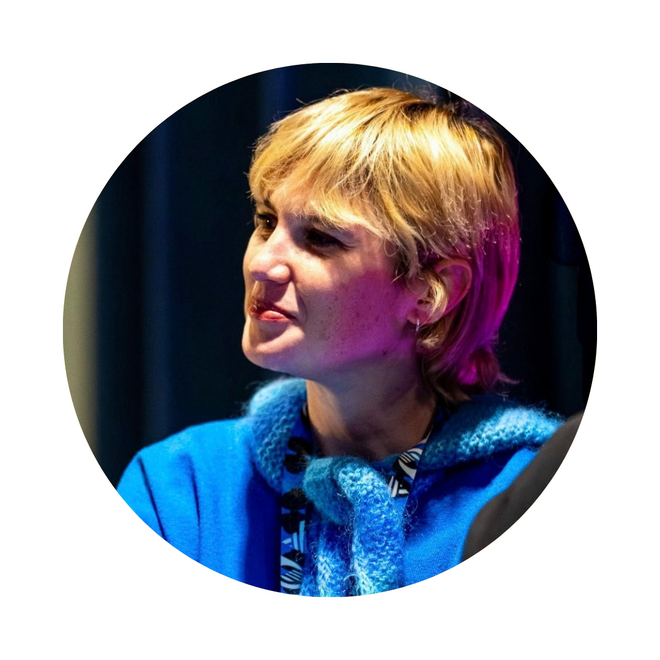
Erica Romero Pender is a music artist, cultural manager, and advocate for live music venues as vital cultural infrastructures. She currently works at Live DMA (the European network of live music associations), ACCES (Spanish), and is vice-president of RASC (Andalusian association of music venues). With a background in psychology and a doctorate in the field, Erica specialises in international cultural innovation and advocacy. In addition, at RNR Producciones (Seville), she leads projects focused on the digital and ecological transition of live music, capacity building for emerging artists, equity and inclusion in the music sector, and sustainable ecosystems for grassroots venues.

Paul Vroonhof has worked for Panteia since 1994. Panteia is a Dutch research company specialised in independent policy research. Paul is senior project manager and built up substantial experience with studies on the cultural and creative sectors, mostly through the management of the European Expert Network on Culture (EENC), commissioned by EC DG EAC in 2015 and renewed in 2018. And again in 2025. In the network, 100 experts on culture and creative sectors are involved, from all EU Member States and abroad, on a large variety of sectors and themes.
Examples of studies Paul has been involved in:
- Discoverability of diverse European content in the digital environment.
- Impact of Gen AI on the labour market of creative industries
- Development of sectoral dialogue in the music sector.
- Feasibility study on a European music observatory
- Future trends and funding gaps in the music sector
- Mental health and well-being in the digital world post COVID
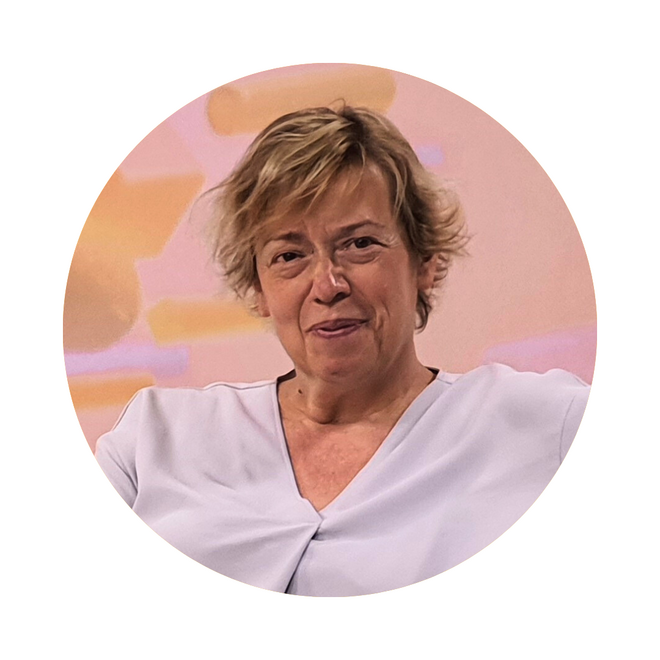
Silja Fischer studied in Berlin, Moscow and Hamburg. She joined the General Secretariat of the International Music Council in 1993 and has served since 2009 as Secretary General. In this capacity, she is notably in charge of IMC’s advocacy action, membership and programme strategies as well as partnerships. Since IMC is an NGO official partner of UNESCO, Silja ensures also the liaison with the UNESCO Secretariat as well as with diplomatic representations of Member States. Besides her great passion for music and its transformative power, Silja strongly believes in strategic collaborations for effective and efficient advocacy work. She represents IMC in various advocacy groups such as the CSO Global Coordination (2005 UNESCO Convention), and the #Culture2030Goal campaign.